

Quick Oyster Mushroom Grow Guide
Do you want to grow so many oyster mushrooms that you become tired of eating them by the fistful?
Yes you do.
Here’s a quick guide on my budget grow using my shed and a shaded spot in the garden
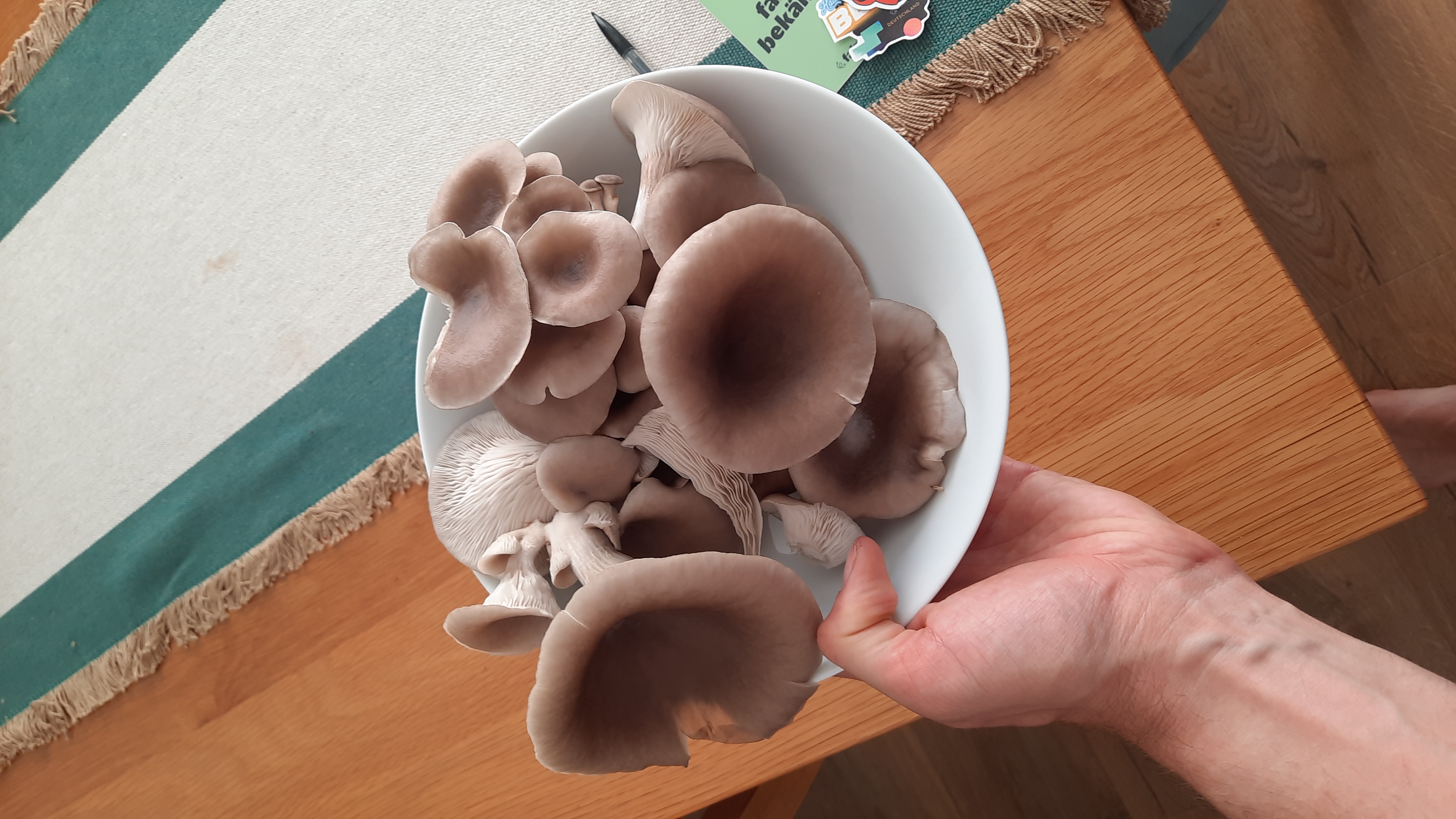
You need:
-
A dark plastic bag
-
A standard bin bag
-
A transparent plastic bag
-
Straw (from the pet shop), 1 large bag
-
Oyster mushroom spawn (buy online or grow your own), blue and tan oysters grow best in our climate. DO NOT CHOOSE GOLDEN OYSTERS, they’re potentially invasive and growers that still sell them are on the naughty list. The larger the bag of spawn, the quicker it will be to colonise your bulk substrate.

The total spend was about £20.
1. Find your bags. You can buy polypropelene bags that are food/heat safe or specific mushroom grow bags online. Bag 1 is to contain and incubate the mushroom spawn, bag 2 should be transparent, it is to create a humidity chamber to help fruit your mushrooms later on.
Bag 1 can also be exchanged for a plastic bucket, with 1inch holes drilled in it at 6 inch intervals, in a diamond pattern.

2. Take your straw and part fill bag 1, so you’ve got enough empty space at the top to wrap the top down later. Boil a gallon or more of water and pour into the bag to completely soak/sterilise the straw, fully covered. Leave to sit overnight with the top of the bag sealed with tape or clothes pegs to keep out contamination.

3. The following day, cut the bottom corners off the bag, press down and let the water drain out.
4. Wash hands and arms.
5. Break up the oyster spawn and mix it evenly into the bag of straw.
6. Wrap the top of the bag round it tightly and tape it over.
7. With a flame sterlilised knife, cut 5 X shaped holes on the other side of the bag, about 3cm length. This is where they’ll fruit from.

8. Wrap this bag in a standard bin liner and leave somewhere warm and humid for a few weeks.
9. Check the bag after a few weeks, it should be fully colonised with white fluff, if not, leave it another week and check again.
10. Bring the inner bag out and expose to light, put the humidity chamber bag over the top and support with skewers or something so it doesn’t stick to the sides of the grow bag. NOTE: By light, I mean dappled shade, maximum. If you stick your grow bag in full sun you run the risk of things overheating and drying out.
11. Mist with pre-boiled (then cooled) water 2x day to keep humidity up.
12. You should see pinning and growth pretty soon. Mine started fruiting without any intervention while left in the shed.

If kept humid, your bag should carry on fruiting for multiple flushes. At the end of its life, leave it out in the rain and see what happens, or bury it somewhere in the garden. You may well see more fruits!
You can also keep your spawn “running” providing it hasn’t been contaminated with mould or flies, simply take a piece from your original bag, and repeat the steps of this guide from part 1 all over again.
This tutorial will also work with most oyster grow kits, use them once they’re “spent” from step 1, providing no contams are present. Just rehydrate them for a few hours by soaking in boiled water (left to cool to room temp first) before starting.